
The study of Textiles and Design involves the study of design, communication techniques, manufacturing methods, fibres, yarns, fabrics and the Australian Textile, Clothing, Footwear and Allied Industries. Practical experiences, experimenting and product manufacturing are integrated throughout the content areas and include the completion of two preliminary textile projects. These projects develop each student's creative abilities and skills in designing, manipulating, experimenting and selecting appropriate fabrics for an end use.
Students in Textiles and Design complete a Major work as part of the HSC course.
Contact
Head of Department: Emily Nightingale
Email: [email protected]
Year 11
Preliminary and HSC Course
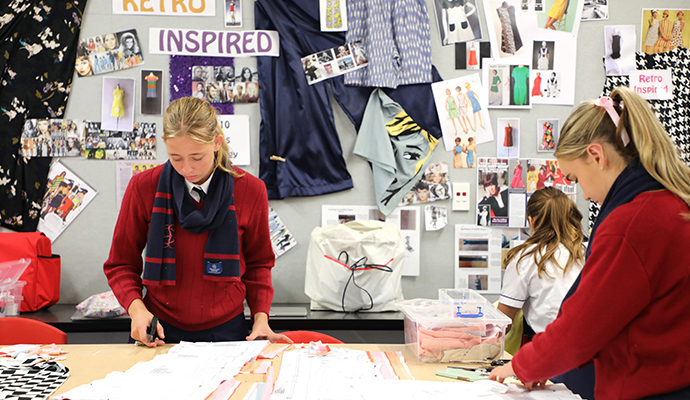
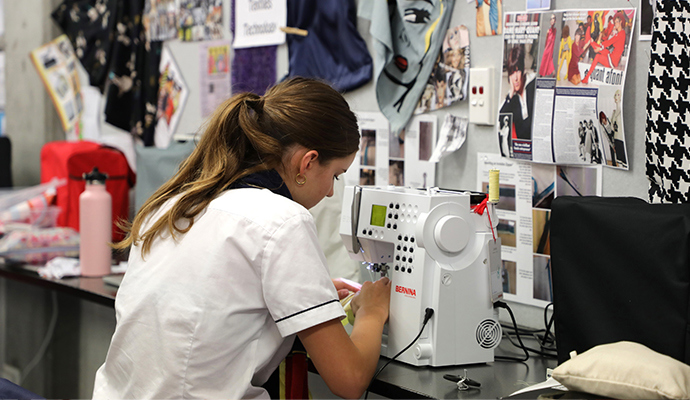
Year 11 Preliminary Textiles and Design course provides students with the opportunity to develop knowledge and skills in the design process, practice professional fashion illustration, and apply artistic concepts like colour, rhythm, and balance. Students also explore properties of textiles, conducting hands-on experiments to test how different fibres, yarns, and fabric structures perform.
Students will examine the Australian textile industry, focusing on modern workplace technology and consumer marketplace trends. The core of the student experience involves completing two practical Preliminary Textile Projects. Through these, students gain critical experience in manufacturing items, manipulating fabrics, and documenting their design journey in a portfolio.
Year 12 HSC Textiles and Design course transitions students from foundational knowledge to a deeper understanding and more complex skill level. The cornerstone of the year is creating the Major Textiles Project (MTP), which accounts for 50% of the external HSC mark. Students select a specific focus area, such as apparel, costume, furnishings, textile arts, or non-apparel, to manufacture a highly proficient textile item alongside a detailed supporting documentation portfolio. Theoretically, students delve deeper into advanced fabric coloration, fabric decoration techniques, and historical and cultural design influences. This course prepares students for future vocational pathways such as fashion or costume design, textiles artistry, interior and furnishing design and textile technology.